
Necessidade / Decisão
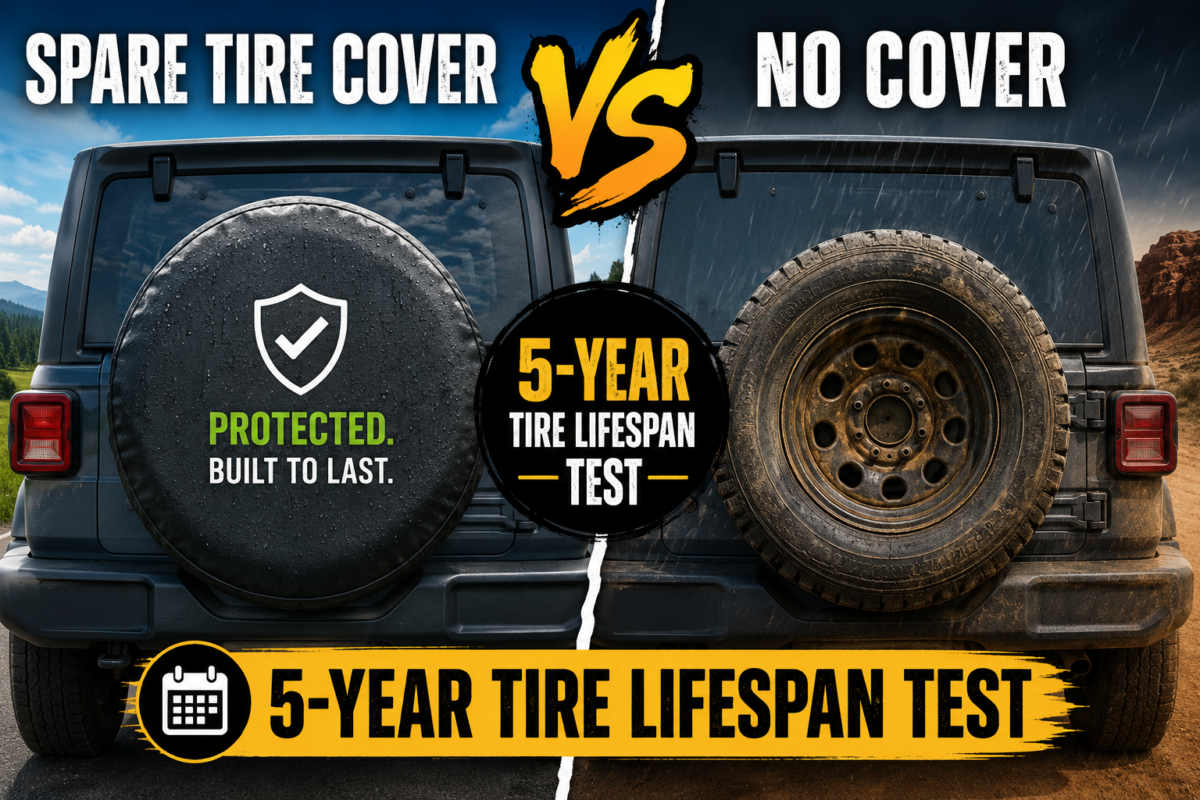
Capa de Estepe vs Sem Capa: Teste de Vida Útil do Pneu em 5 Anos
Mai
Uma das formas mais honestas de comparar qualquer acessório é avançar no tempo e ver o que realmente acontece. Com capas de estepe, o caso é incomumente claro quando você faz isso. O pneu sob a capa e o pneu ao lado dele num veículo comparável seguem caminhos muito diferentes ao longo dos anos — mesmo que, no primeiro dia, sejam idênticos.
A maioria dos proprietários não pensa nisso até o momento em que o estepe é realmente necessário. Eles vão até a traseira do veículo, retiram o estepe do suporte e descobrem que a parede lateral trincou, a roda está corroída ou a borracha ficou dura e inflexível. A essa altura, a decisão sobre a capa já é tarde demais. O dano já está feito.
Abaixo está um panorama ano a ano do que acontece com um estepe ao ar livre sem capa, em comparação com um sob Vinil Náutico. A comparação é baseada no que os proprietários relatam e no que vemos nas capas devolvidas após anos de uso. O seu clima específico, a situação de estacionamento e a rotina de cuidados podem alterar os números, mas a trajetória é consistente.
A coisa mais surpreendente é a rapidez com que a diferença se abre.
Um estepe montado na traseira sem capa normalmente apresenta ressecamento por UV visível a partir do 3º ao 5º ano de exposição diária ao ar livre. Um estepe protegido por Vinil Náutico tende a ainda parecer novo na marca de 5 anos. A capa essencialmente dobra a vida útil do estepe enquanto mantém a roda livre de corrosão.
Ano 1 — os dois parecem bem
Sem capa: ainda bom. Pode haver um leve escurecimento da parede lateral em regiões com sol de verão intenso.
Com capa: idêntico ao primeiro dia. A capa protege do sol e das intempéries de forma abrangente.
Ano 2 — diferenças sutis aparecem
Sem capa: a parede lateral começa a apresentar oxidação superficial. Os agentes anti-UV de negro de carbono na borracha começam a se esgotar na superfície mais exposta, especialmente a parte voltada para o oeste ou sul.
Com capa: ainda impecável. O material da capa pode apresentar leve desgaste superficial, mas o estepe em si permanece inalterado.
Ano 3 — degradação visível começa
Sem capa: microfissuras ficam visíveis na parede lateral sob luz intensa. O pneu ainda é funcional, mas está comprometido. Em regiões costeiras e de ar salgado, a roda começa a mostrar corrosão nas superfícies expostas.
Com capa: ainda impecável. O Vinil Náutico pode apresentar pequenas marcas superficiais, mas a função da capa permanece inalterada e o pneu por baixo não é afetado.
Ano 5 — zona de substituição para o estepe sem capa
Sem capa: ressecamento definitivo. Fissuras na parede lateral, possivelmente profundas o suficiente para comprometer a integridade de retenção de pressão. O pneu está em condição de “substituir antes do próximo uso”. A corrosão da roda está avançada; recondicionamento ou substituição podem ser necessários.
Com capa: o pneu ainda está em boas condições. A superfície parece ter um ou dois anos. A roda está impecável. A capa de Vinil Náutico está próxima do fim de sua vida útil ao ar livre, mas o pneu e a roda que ela protegeu ainda têm anos de vida útil restante.
Ano 7 e além — a economia composta
Sem capa: o estepe original foi substituído há anos. Para um Wrangler, Bronco ou G-Wagon, isso normalmente significa uma ou duas substituições do estepe a $300 ou mais cada uma, além do recondicionamento da roda.
Com capa: o estepe original ainda está em uso. Uma capa de Vinil Náutico pode ter sido substituída (~$169). O custo total ao longo de sete anos fica em torno de $300 em capas versus $700 ou mais em substituições no lado sem capa.
Ressalvas importantes
Os fabricantes de pneus (Michelin, Goodyear, Bridgestone e outros) recomendam substituir os pneus até o ano 10, independentemente do uso, porque os compostos de borracha internos envelhecem em seu próprio ritmo. Uma capa não altera isso. O que ela faz é manter o estepe em condição de uso até essa marca de 10 anos, em vez de deixá-lo ficar inseguro no ano 5 ou 7. A capa amplia a janela segura; não elimina a substituição eventual.
Perguntas frequentes
Uma capa vai manter o meu estepe seguro por 20 anos?
Não. O envelhecimento do composto do pneu eventualmente ocorre independentemente da proteção UV. Planeje substituir um estepe no ano 10, mesmo que ele pareça bem. Uma capa estende a vida útil de aproximadamente 5 anos para cerca de 10 — não indefinidamente.
Meu estepe fica sob o assoalho do porta-malas. Ele é mais seguro do que um estepe externo com capa?
Praticamente o mesmo. O armazenamento interno protege dos raios UV da mesma forma que uma capa. Ambas as abordagens podem manter um estepe em boas condições por 8 a 10 anos. O uso externo com capa vence na personalização e visibilidade, mas a proteção subjacente é comparável.
Estou no quarto ano sem capa. Vale a pena instalar uma agora?
Sim. Uma capa interrompe a degradação UV a partir deste momento. Os danos já causados não serão revertidos, mas você preserva a vida útil restante do estepe e da roda.
A roda realmente se beneficia de uma capa, ou apenas o pneu?
Ambos. Em regiões costeiras e de ar salgado especialmente, uma roda exposta corrói anos antes de o pneu falhar. Uma capa mantém os depósitos de sal, a umidade e o sol direto longe da roda, o que é parte do motivo pelo qual as economias se acumulam ao longo do tempo.
Comece a proteger hoje
O Vinil Náutico ($169) oferece até 5 anos de proteção UV com uma única capa. O Vinil Náutico com Kit Antifurto ($199) adiciona hardware de travamento no mesmo material.
Continue explorando
Pesquisar por veículo / tema
- Capas para Jeep Wrangler
- Capas para Ford Bronco
- Capas para Mercedes G-Wagon
- Capas para motorhome / trailer / caravana
Produtos em destaque
- Grinch Wearing a Cap
- German Shepherd portrait
- G-Wagon Engineered Icon
- Design personalizado (aprovação gratuita)
Leitura relacionada
